Postcards from Yunnan

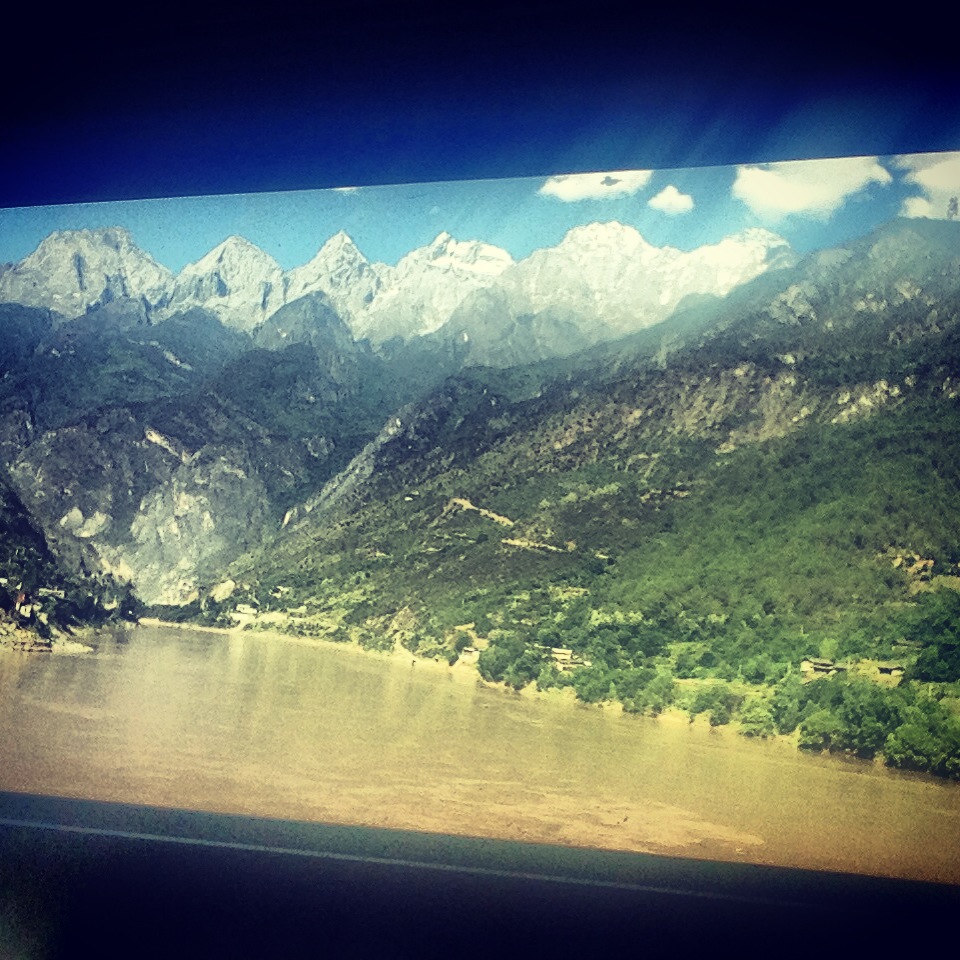
This is as close as I got to the Tiger Leaping Gorge, one of the world's deepest river canyons. I had planned to hike the gorge, but the trail was closed because of a landslide.

View of the Tiger Leaping Gorge, one of the world’s deepest river canyons, from my bus window.  I had planned to hike a trail that cuts through the gorge, but it was closed due to a landslide.

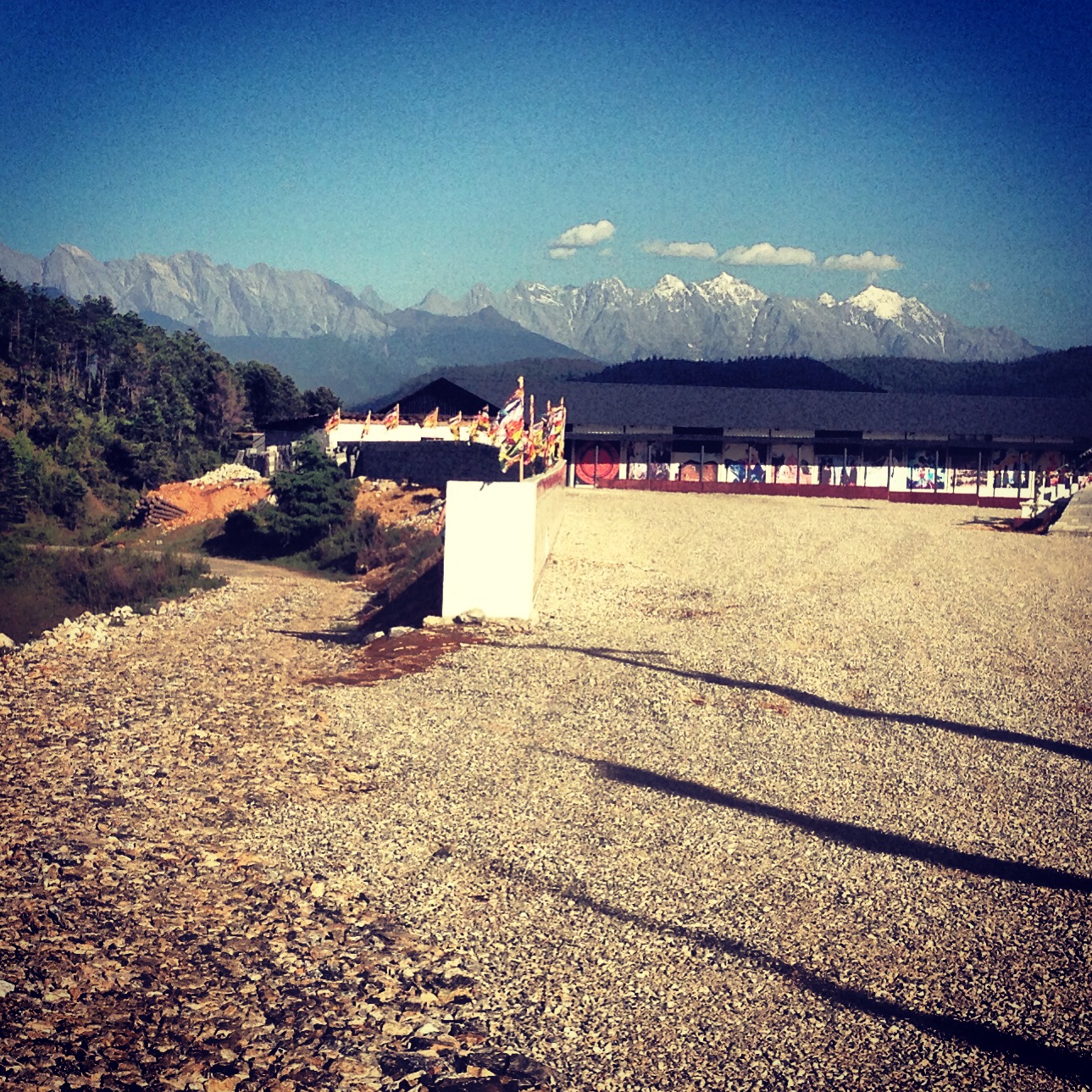
Scenery

Some of the scenery at a bus stop between Dali and Shangri-La in southwestern China’s Yunnan province.

Shuttlecock

Men take turns kicking a shuttlecock in Dali Old Town. Shuttlecock kicking is a traditional Chinese folk game.

Continue reading

A walk in the clouds

“It’s cold up there,” the young man in front of me said. “You should rent a coat.”

I was in line for the cable car at the bottom of Cangshan Mountain in Dali, Yunnan province. It was sunny and around 80 F, and I was wearing a long-sleeved T-shirt and shorts. How cold could it possibly be at the top of the mountain?

“I’ll be fine,” I said. Continue reading

Awestruck in Dali’s Old Town

Dali is so beautiful that it can be downright dangerous.

I was riding a bike through the city’s Old Town, taking in the scenery and historic architecture, but not the giant pothole that lay in front of me. The next thing I saw was concrete.

Fortunately, I landed left knee first, and suffered only a few bruises. I hobbled to a nearby pharmacy and, using broken Chinese and a little point and grimace, described what I needed. I felt embarrassed, but if any Chinese city is going send me head over heels I’m glad it was Dali. Continue reading

Fast times call for life in the slow lane

I like walking along the moat that surrounds the Forbidden City because it gives me a feeling that’s hard to find elsewhere in Beijing: peace.

On a clear day the reflections of the trees and towers lining the palace’s outer wall stretch across the moat, their colors preserved in the water. Old men with wooden fishing poles cast their lines a few feet from each other and smoke cigarettes and make small talk as they wait for a bite. Continue reading

Spring, I hardly knew you

The best time of the year to visit Beijing is Spring. The temperatures are comfortable, gusty winds generally keep the skies blue and trees begin to bloom.

Dormant streets come to life, as old men hunker over small tables to watch card games. Vendors pack up their tents and grill barbecue in the open. Children who have been cooped up all winter shed a few layers of clothes and run freely in the warm air.

It sounds romantic, but the truth is Beijing’s Spring is more of an intense fling. That’s because it passes in the blink of an eye. After five months of extreme cold (this winter, which saw the coldest temperatures in Beijing in more than 30 years and long stretches of dangerous air pollution, was especially trying), we get about one month of good weather in May, followed by four months of blazing-hot summer. Continue reading

Small town PRC

By the time the sun set in Anxi, the only noise I could hear outside was the crow of a lone rooster. The streets near the home where I was staying were empty. The skies were dark, lit up only by stars peeking out from the clouds blowing overhead.

It reminded me of home.

I come from a small town in Eastern Kentucky. Small as in population 6,000. Anxi, population 1 million, is a “small” place too, according to the family I stayed with. Continue reading

White male seeking red roses

Finding a flower shop had never been so hard. Then again, this was the first time I’d tried to do it on an island in China.

It was Valentine’s Day, which unfortunately also happens to be my girlfriend’s birthday. I say unfortunate because the stakes are twice as high. Choose a lame gift or a less-than-spectacular restaurant and the consequences are exponentially bad.

We were visiting Gulangyu, a small island off the coast of Xiamen in the southeastern province of Fujian. Gulangyu became a treaty port after the First Opium War (1839-42), and 13 countries — including the US, Spain and Japan — established consulates, churches and businesses. Continue reading

The heart of Ox Street

Many of China’s temples and churches were wrecked during the Cultural Revolution (1966-76), when communist leaders encouraged young students and workers to destroy symbols of “old China.”

Fortunately for preservationists, Beijing’s Niujie Mosque survived. The mosque was built in 996, during the Liao Dynasty (907-1125), and is the oldest temple in the capital. It’s even older than the Forbidden City imperial palace, which began construction in the Ming Dynasty (1368-1644). Continue reading