Miracle on Qinghai Street

I’m in Hangzhou, Zhejiang province, for the Chinese Labor Day holiday, and all I wanted yesterday after trekking around the city on foot for eight-plus hours was a hot shower.

When I got back to my hostel, I set my cell phone on the bathroom sink, so I could charge it and listen to a podcast while I freshened up. A few minutes later, much to my horror, I heard a “plopping” sound. A smartphone owner’s worst nightmare had come true. Continue reading

Chinese healthcare: a bargain with a bother

I went to Peking Union College Medical Center on Tuesday to have my ankle examined. I sprained it over the weekend and wanted to make sure I didn’t break anything.

The traffic outside the hospital was bumper to bumper, and most of the parking spaces for bikes and electric scooters were taken. It’s like this every day, said Liang, a nurse who met me at the entrance. Liang works for Vista Medical Center, which provides medical translation when my company’s foreign employees need to visit local hospitals. 

Peking Union College Medical Center was set up in 1921 by the Rockefeller Foundation. It’s regarded as one of the best in China, and is where the Communist Party leaders go for medical treatment. Continue reading

As the ankle turns

I sprained my left ankle over the weekend. I wish I had a good story to go with it — that it happened as I pushed a child out of the path of a moving bus, or dove to catch a 500-year-old Ming Dynasty vase that was falling from a shelf.

The truth is I injured it while walking out of a video game-themed bar. It was dark. I had been drinking (a little). I was angry, after inexcusably losing a few games of Connect Four, and worst of all, not paying attention.

I missed a step and heard a crunching sound. Within a half hour, my ankle had swollen to the size of a baseball. Since then I’ve been on a steady diet of Advil, and tomorrow I’ll go to a hospital to have my foot X-rayed.

That I would injure myself while living in Beijing is not surprising. This city is full of broken-legs-waiting-to-happen for the inattentive. Pedestrians locked into their cellphones ignore bikers when crossing the street (I’ve dodged, and cursed at, more than a few). Motorists routinely drive within inches of bikers and pedestrians to get them to speed up (That might be OK in Grand Theft Auto, but not in real life).

Beijing's mean streets aren't for the timid.

Beijing’s bustling streets aren’t for the timid.

Many old homes in Beijing have an elevated doorstep, which — according to traditional belief — helps keeps the evil spirits out (Never really understood how this one worked, unless evil spirits are 6 inches tall).

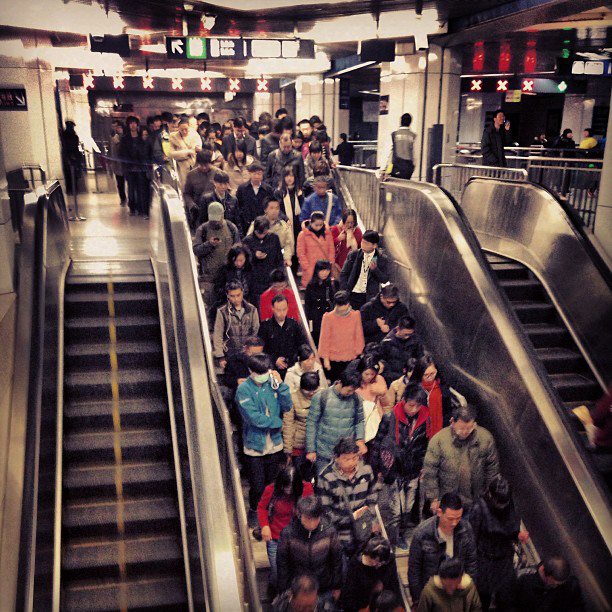
Beijing subway, where pushing is never optional.

Beijing subway, where pushing is never optional.

Underground, cleaning crews at the subway station in my neighborhood have an odd habit of mopping the floors around rush hour, as if they have a sinister streak and are trying to invite disaster. Getting on and off the trains can be dicey during peak times, as pushing and shoving are the preferred means of getting through a crowd (Even old ladies can be vicious).

A couple of years ago, I hiked an unrestored section of the Great Wall. The stairs were crumbling in many areas, and it was easy to trip if you didn’t watch where you were going. How horrible would it be to turn an ankle out here and then have to hobble back to civilization, I thought.

At least it would have been a good story.

The Great Wall, where if you're not careful the next step could be your last.

The Great Wall, where if you’re not careful, the next step could be your last.

Postcards from Guangxi

A bridge in Guilin.

A bridge in Guilin, capital of Guangxi Zhuang Autonomous Region.

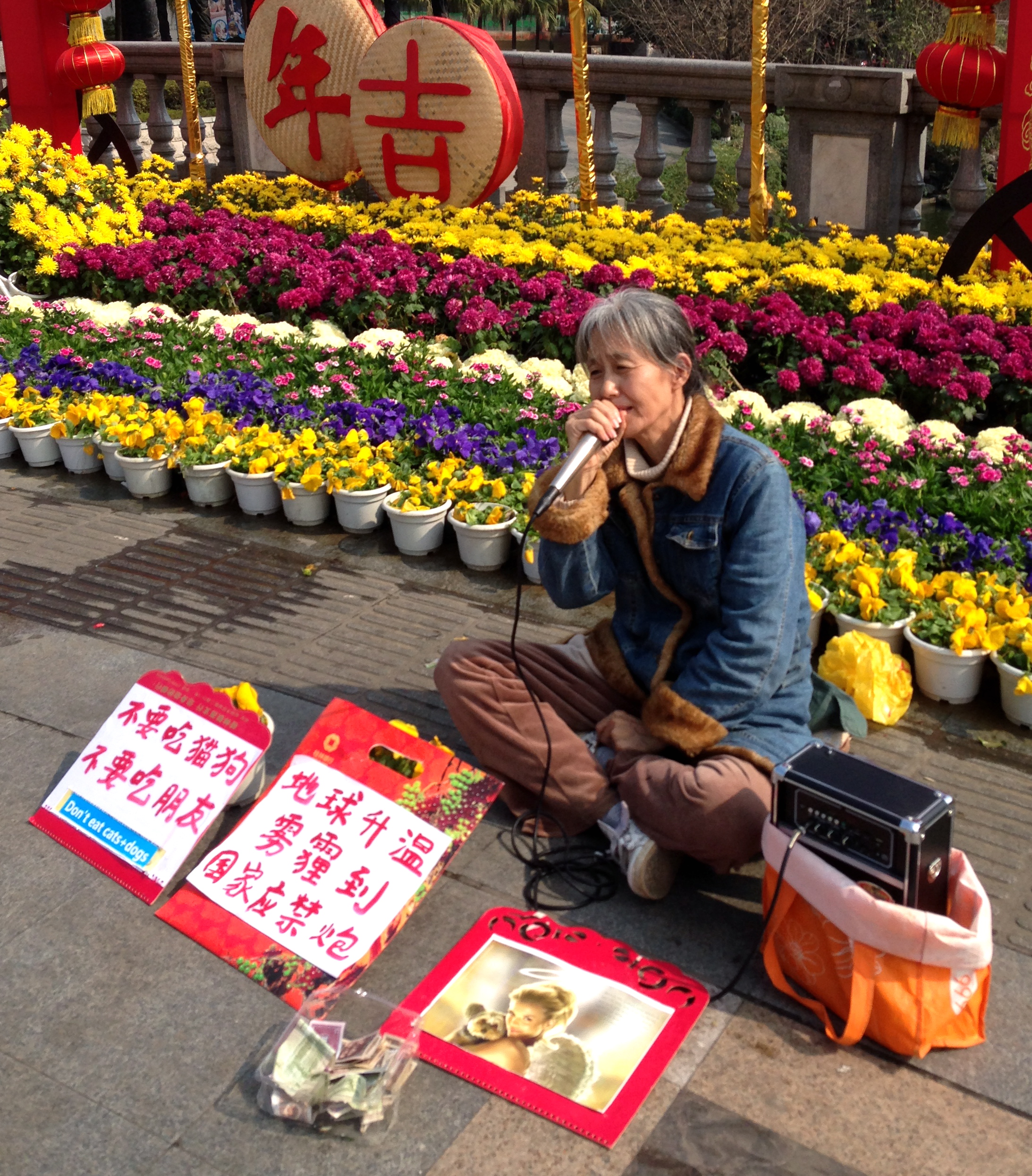
A street performer in Guilin. The sign on the left says: "Don't eat cats and dogs. Don't eat friends." The other one says, "With global warming comes smog/haze. The country (government) should ban firecrackers."

A woman I passed on the way to my hostel in Guilin. The sign on the left says, “Don’t eat cats and dogs. Don’t eat friends.” The other one says, “With global warming comes smog/haze. The country (government) should ban firecrackers.” Fireworks are commonly used to celebrate Chinese New Year, but some people have called for a ban on them to curb air pollution.

In a cab, somewhere between Guilin and Yangshuo.

In a cab, somewhere between Guilin and Yangshuo county.

IMG_5566

Yangshuo county, one of the most popular tourist destinations in China.

IMG_5452

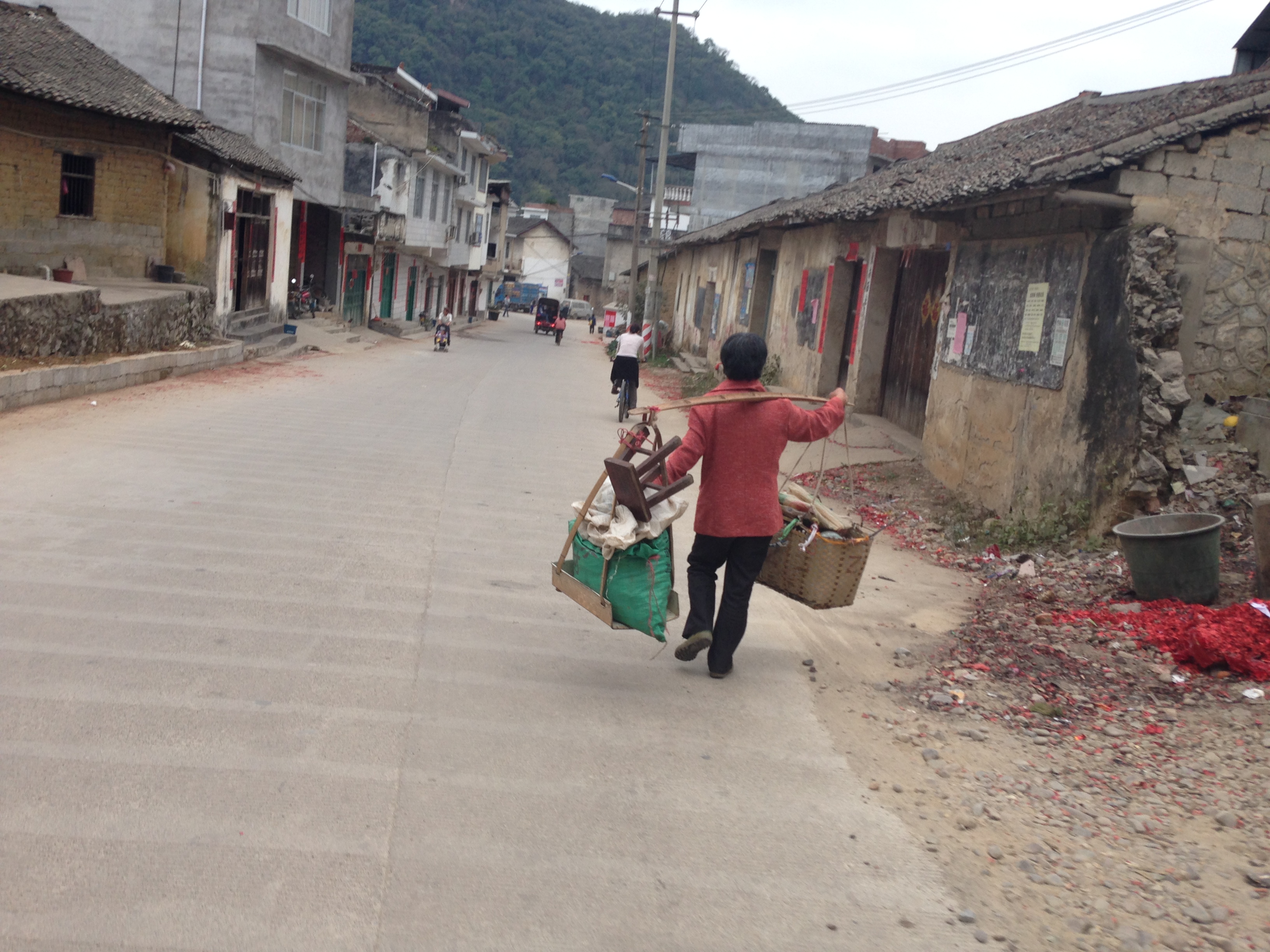
Biking through an old town outside Yangshuo county.

In pilots we trust

Ever since a Boeing 777 bound for Beijing went missing, the capital has been abuzz with theories about the plane.

Terrorism? Pilot error? A fatal mechanical malfunction? With each passing day and no sign of Malaysia flight MH370, speculation over the fate of the 239 passengers and crew on board — including 154 Chinese — only grows.

“I don’t want to think about. I don’t dare,” my Chinese teacher Cathy said last week, during a break in one of our lessons. Cathy prefers taking the train or riding in a car over flying because she feels safer on the ground, even though the statistics say otherwise. Continue reading

Fly the smoggy skies

This is your Captain speaking. It’s 4:30 p.m. local time, March 6, 2024, and we’re beginning our descent into Beijing, although you could never tell by looking out the window. Visibility is at 5 feet and shrinking. The weather forecast calls for cancer-causing smog, followed overnight by acid rain.

Masks will be dropping from the ceiling in the next couple of minutes, but don’t be alarmed. If your final destination is Beijing, you must put on a World Health Organization-approved pollution mask before leaving the airport. If you’re traveling with a small child, please make sure their mask is properly secured before putting yours on.
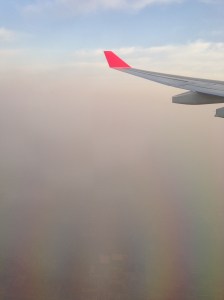
Smog.

Beijing, from 20,000 feet.

Our cabin crew will be going around in a few minutes to hand out anti-acid tablets. Unlike the masks, these aren’t required, but I highly advise taking a few just in case that lamb meat you order for lunch turns out to be diseased rat. That actually happened to me once, and I got so bloated that I looked like a woman pregnant with twins in her third trimester.

Pollution masks fall from the ceiling. A few people who were asleep during the announcement scream, but quickly calm down after they realize the plane hasn’t lost cabin pressure; they’re just landing in Beijing.

A few more things to tell you while we prepare for landing. Recently, there have been scandals involving baby formula, bottled water, fruit and vegetables containing high levels of pesticide, recycled cooking oil … (turns to co-pilot, voice barely audible: Bob, I know I’m forgetting something) … oh, and fresh air in a can. If, like me, you have a pulse, then you’re probably concerned about at least one of these things. However, all of these items are for sale in our duty-free catalog and can be purchased using Mastercard or Visa.

One more reminder: if you’re outside and your mask gets undone, don’t run. Just lie on the ground and dial 120. Medical personnel with oxygen tanks will respond within minutes to assist you.

It’s been a pleasure having you on board, and we hope you enjoy your stay in Beijing.

Man on the Moon Hill

To get a birds-eye view of Yangshuo’s picturesque scenery, I hiked up a hill a few miles south of the county’s bustling center.

IMG_5194

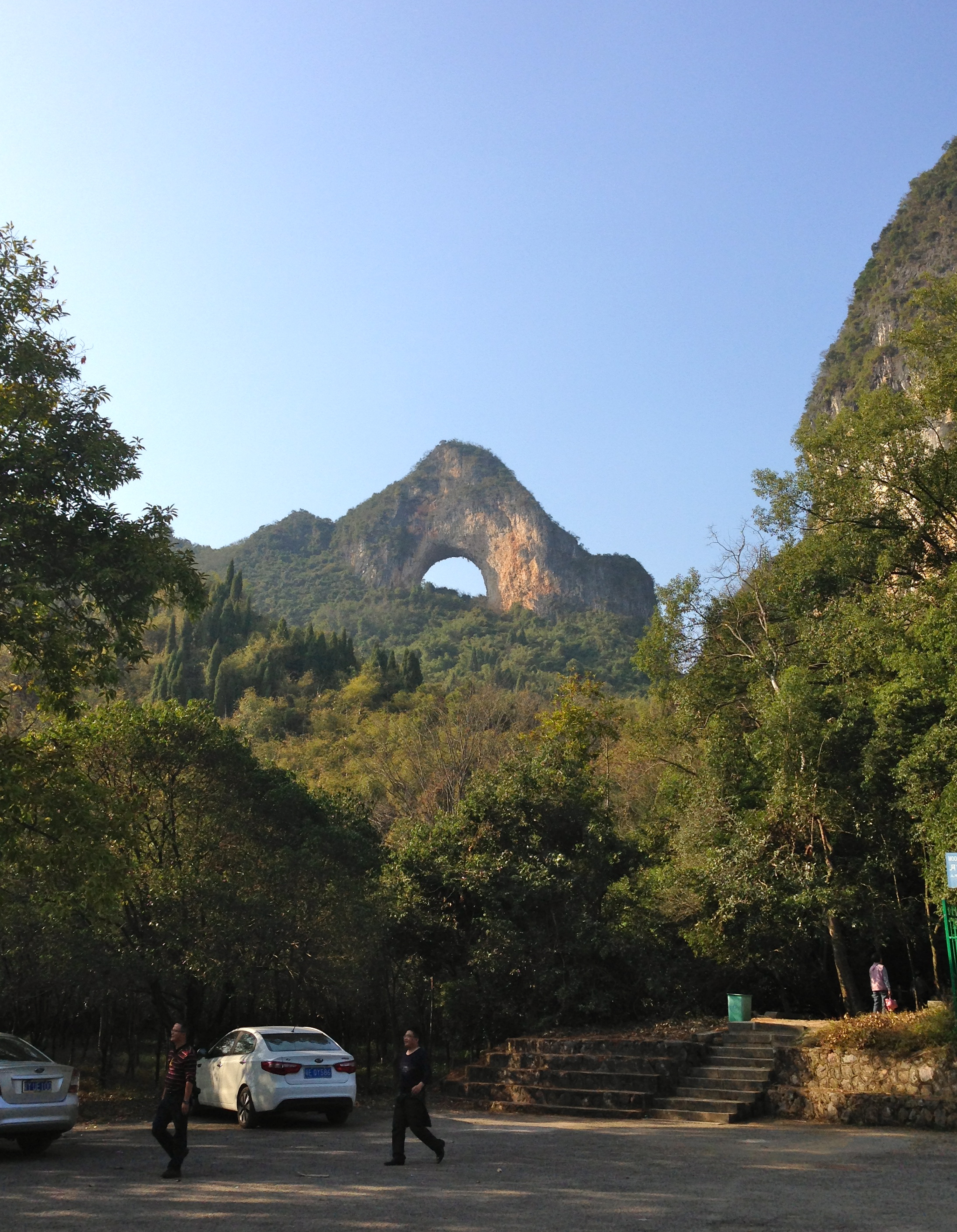
Moon Hill.

The hill is known for its natural arch, and the Chinese call it Yueliang shan (月亮山), which literally translates into moon mountain. Sections of the 1,250-foot hike to the arch are steep, but the trail is paved with concrete steps. Continue reading

Scenery unforgettable; the camera bag, not so much

I’ve traveled enough that preparing for a trip has become routine. The night before I leave, I make sure essential items have already been packed. Plenty of clean underwear. Passport. Cellphone charger. ATM card. Digital SLR camera.

I sleep easier knowing that when I wake up the following morning, all I have to worry about is brushing my teeth (never optional) and showering (sometimes optional).

For Chinese New Year, I traveled to Yangshuo (阳朔), a county in southern China’s Guangxi (广西)Zhuang Autonomous Region. Because of its unique landscape, Guangxi is a place I’d been wanting to visit ever since I moved to China. The province’s karst peaks give it an otherworldly feel. Continue reading

The USA isn’t the only melting pot around

To practice my Chinese, I make an effort to strike up conversations with strangers in Beijing. One thing I’ve discovered is that almost none of the people I meet are from here.

They come to the Chinese capital from all over the country to study or work, and make up a significant portion of the city’s 20 million residents. Nearly one in three people in Beijing are migrant workers, according to China Daily.

This becomes most apparent during Chinese New Year, when everyone who isn’t a native Beijinger returns home to celebrate the holiday with their families. Bustling neighborhoods slow to a crawl. Beijing’s notoriously bad traffic becomes manageable. I can even usually find a seat on the subway, which feels like a luxury because it’s so overcrowded most of the time.

The 40-day travel rush around the Spring Festival period is called chunyun. According to Xinhua News Agency, Chinese passengers will make an estimated 3.62 billion trips during this year’s chunyun, which is commonly referred to as the world’s largest annual human migration.

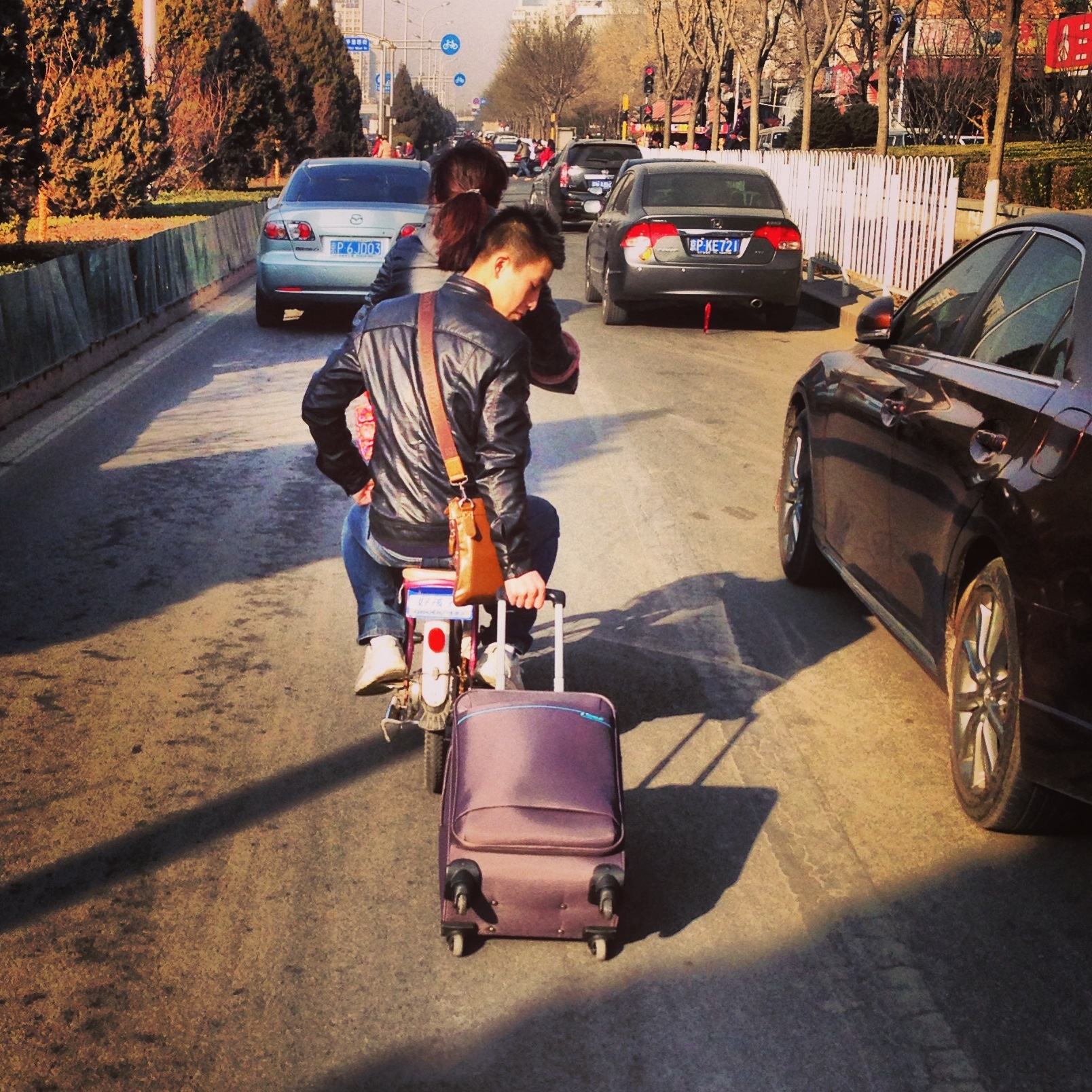
Cart puller.

A man drags his luggage behind an electric bike in Beijing. The capital empties out in the week leading up to the Spring Festival holiday, with millions returning to their hometowns.

The holiday travel puts a huge strain on China’s rail and air transportation networks. A friend of mine who runs a restaurant in Beijing said last week that his waitresses have had trouble getting train tickets home. One lined up outside a ticket office before dawn several days in a row, but came up empty-handed, he said.

I’ll be traveling during chunyun, but not to visit family. I’m flying to Yangshuo in southern China, a small city known for its karst peaks, which inspired the artwork on the back of the 20 yuan bill.

I should have plenty of opportunities to practice speaking Chinese while wandering through the countryside. And, with it being Spring Festival, I might even meet a few “real” locals.