Even the blue, blue grass of home isn’t idyllic

The Chinese characters for America are 美国 (meiguo), which literally mean “beautiful country.”

Whoever came up with this translation knew what they were talking about. After spending more than 14 months in Beijing, every day in my hometown of Morehead, Kentucky, feels like one of those dreamy scenes from a Claude Monet painting. Dark green grass. Rolling hills. Sunsets you can get lost in.

I took all these things for granted when I lived here. People would ask me about my hometown and I’d usually say something like, “It’s small, has only one McDonald’s and nowhere to shop.” I talked a lot about the things Morehead didn’t have, which – I now realize – is what makes it great. Continue reading

A capital idea? Hardly!

For most of my life, China has been a bit of a mystery.

In primary school, I learned about European royalty, the plight of the Native Americans and the wisdom of Abraham Lincoln. In high school, I had an animated history teacher who worked himself into such a frenzy during lectures that his stories became more like theater. I could close my eyes and, with his vivid descriptions, picture a stumpy Napoleon riding horseback into the teeth of a thousand bullets.

Sadly, Asian history was boiled down to just a few major events: a country that bombed us (Japan, at Pearl Harbor) and a country we bombed the hell out of a couple of decades later to stop the spread of communism (Vietnam). In college, I bought a book about a World War II mission to rescue US and British POWs, including some survivors of the Bataan Death March, from a Japanese camp in the Philippines.

So it wasn’t until I moved to China in 2010 that I began to understand the country’s history. I didn’t even know that Beijing was not always the national capital. In April, I traveled to Nanjing, the seat of power from 1368 to 1420 during the Ming Dynasty and again in the early 20th century, before the Communists “liberated” China in 1949.
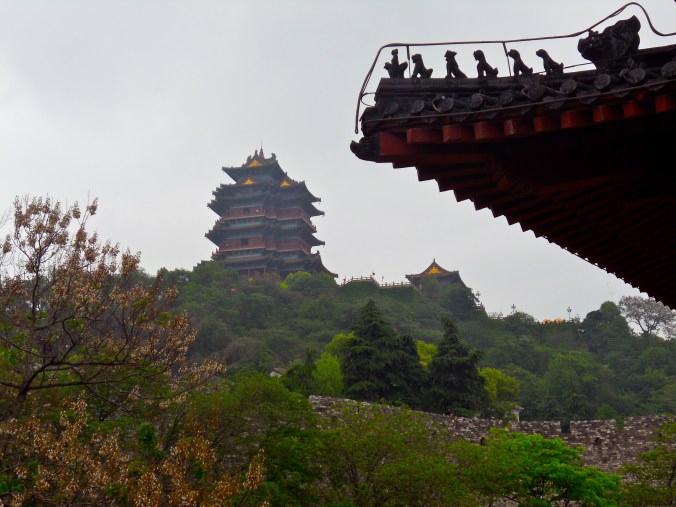
The Jinghai Temple.

A ceiling inside the Jinghai Temple.

The Linggu Pagoda was built in 1929 to honor soldiers who died in a war between the Chinese Nationalists (Kuomintang) and local warlords.

To third Ming emperor Yongle, who moved the capital to Beijing in 1420, I’ve got to ask: Dude, what were you thinking? Beijing doesn’t get much precipitation, so it can be brutally dry. It’s prone to sandstorms in spring, which leave a red film over everything unfortunate enough to be left outdoors. The winters are long and, when the winds whip down from Siberia, bone-chillingly cold. And unlike many major cities in the world, it isn’t located near any large body of water. Continue reading

The hunt for red November

One of the first parks I visited in Beijing was Fragrant Hills (Xiangshan). The park is best known for its smoke trees, which turn the hillside red in autumn.

I went in November, hoping to make a few nice pictures to send to family and friends back home. The climb to the top of the park took about two hours. Along the way I saw plenty of yellow and golden leaves, but no red ones. To make matters worse, when I reached the peak the view of Beijing was obstructed by pollution.

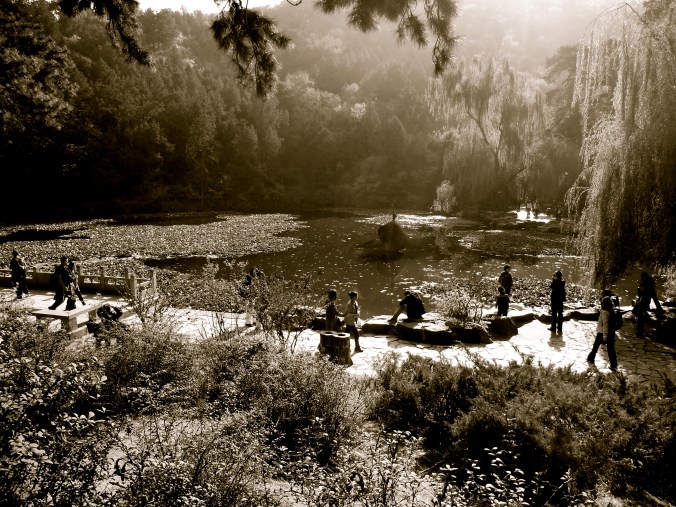
But the hike wasn’t a total loss. On the way down, I found a trail that led to a pond. The surface was covered with leaves and water lilies. I took several pictures, and then climbed to a higher spot so I could get the people walking around the water in the frame. From there I captured one of my favorite images of my first few months in China.

A tale of two sides

Shanghai is a city best seen from above. I recently took in a view from a rooftop bar called Flair, on the 58th floor of the Ritz-Carlton.

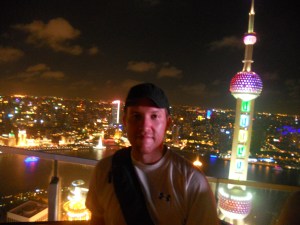
The bar was full, but I was able to wedge into a spot overlooking the Oriental Pearl Radio & TV Tower. An array of neon lights from the skyscrapers in Shanghai’s Pudong district – an area that was mainly farmland until it was developed in the 1990s –  gave the clouds moving slowly overhead a yellowish tint.

View from the top of the Ritz-Carlton.

Shaped liked a rocket waiting to blast off into space, the Pearl Tower reminded me of one of the tacky electronic toys that vendors outside the Forbidden City in Beijing use to get your attention as you enter the palace. To the southeast, another behemoth of a building, the 101-story Shanghai World Financial Center – jutted into the sky. Not to be upstaged by the bizarre Pearl Tower, the top of the World Financial Center resembles a bottle opener, with a gap large enough for a modern day King Kong to perch. Continue reading

Vanishing into thick air

My biggest complaint about Beijing is the pollution. Nothing saps the energy out of me first thing in the morning quite like looking out the window and not being able to see a building that I could probably hit with a baseball. It’s depressing and bad for my health.

But I put up with it because I live near the heart of a booming metropolis. Public transportation is great. The food is cheap. And, when I need a respite from the congested streets and noisy shopping markets, there are plenty of art museums and well-maintained parks to get lost in.

I recently traveled to Tai’an, in the eastern province of Shandong, to climb one of China’s holiest Buddhist mountains with a friend from college. We left in the morning, on a high-speed train from Beijing’s South Railway Station. A light haze hung over the city. Continue reading

Tall, dark and shiny Hong Kong

I used to have dreams in which I would walk to the edge of a cliff and peer down into a seemingly bottomless canyon. Suddenly, a gust of wind would knock me off my feet, and I’d tumble over the side.

Most of the time, I’d catch a branch on the way down and pull myself back up to safety. But sometimes I’d continue falling toward imminent death. In those dreams, the feeling was real, because I was actually falling out of my bed. I’d wake up on the floor with that weak-in-the-knees sensation you get from fear.

I experienced that same feeling while observing Hong Kong’s skyline from the Peak Tower. Located near the top of Victoria Peak, a 552 meter hill overlooking the city, the tower sits 396 meters above sea level. I went at night, on an evening when the sky was clear. I was lucky, because sometimes the pollution from factories on mainland China is so heavy that it casts a haze over the island, considerably reducing visibility of the skyline. Continue reading

There’s no space like home

One of the things I miss most about living in a small town is the space: the ability to stretch out my arms without hitting another person or walk for miles without seeing anyone.

It’s a luxury you lose in a city like Beijing, where even the widest streets sometimes feel every bit as cramped as the smallest alleys. The crowds are difficult to avoid, whether you’re riding the subway in the middle of the day or going to the bank on a Saturday. The feeling of constantly cramming into lines and bumping elbows with strangers can become overwhelming.

When I need a break from the crowds, I often head into one of Beijing’s 300 parks. For a city hell-bent on growth and economic development, Beijing has a surprising amount of space committed to leisure and recreation.

The largest is Chaoyang Park. At 713 acres, it is is comparable in size to New York’s Central Park. It’s home to a very unsafe-looking roller coaster (the only thing holding the safety harness down was a seat belt that looked like it had been pulled from a junked car), volleyball courts that were used during the 2008 Olympic games and restrooms that resemble a giant ladybug.

It’s easy to get lost, as I managed to do last summer when I rented a tandem bike with my girlfriend and made the fatal error of letting her lead the way. When we came to the conclusion that neither of us had any idea where we were going, I picked a direction and peddled like a madman to get us back to the rental office before it closed. Despite giving it my all we arrived a few minutes late and had to forfeit the deposit for the bike. Continue reading

Fortress opens window to ancient China

I imagine it got lonely up here at night in the darkness, 12 meters off the ground. It was probably quiet too with the entire city sleeping, and with no cell phones, no radio, no TV. Just a bow and arrow and maybe some food and water to tide you over till the morning.

The sunrise must have been brilliant, with a view extending several kilometers into the countryside. Even the most indecisive minds likely had ample time to make judgments about the intentions of men approaching the gate. Business or battle. Friend or foe.

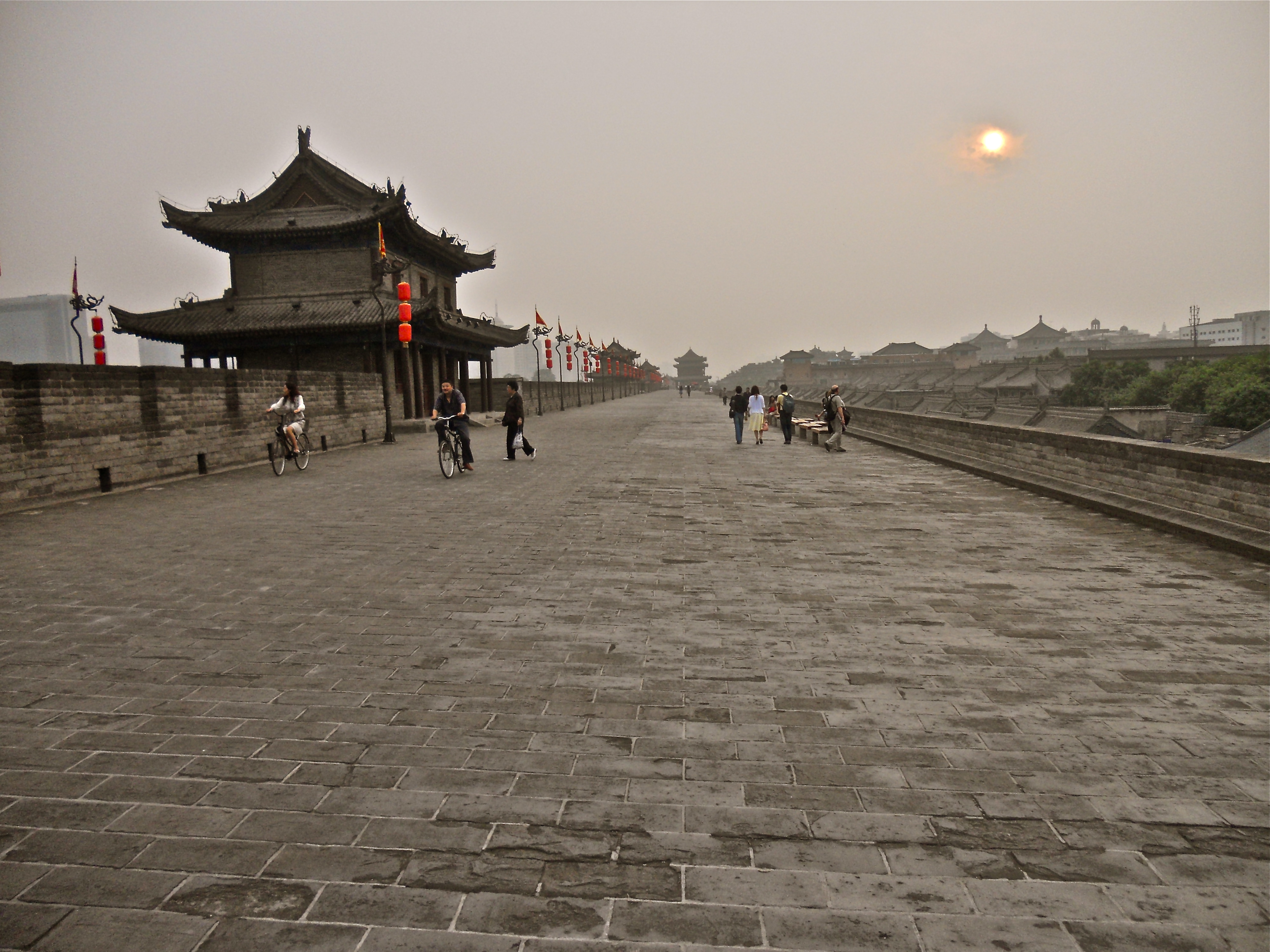
The towers where the first protectors of Xi’an patrolled in the 14th century are today home to merchants peddling cheap souvenirs and renting bikes to tourists. There is no view of the horizon anymore, thanks to scores of high-rise apartment buildings and air pollution from factories. The silence is gone too, as cars and buses lined bumper-to-bumper rumble through the wall’s gates all hours of the day, entering the heart of a growing city with a population of already 8 million.

A street in the city center that leads to one of the wall's gates.

The wall is now a tourist attraction, one of many sites that draw visitors from around the world to Xi’an, in northwest China’s Shaanxi province. The wall, shaped like a rectangle, surrounds the city center. It was built in 1370, during the Ming Dynasty (1368-1644), and is one of the best preserved ancient walls in China. Continue reading

Where there’s a Wall, there’s a way

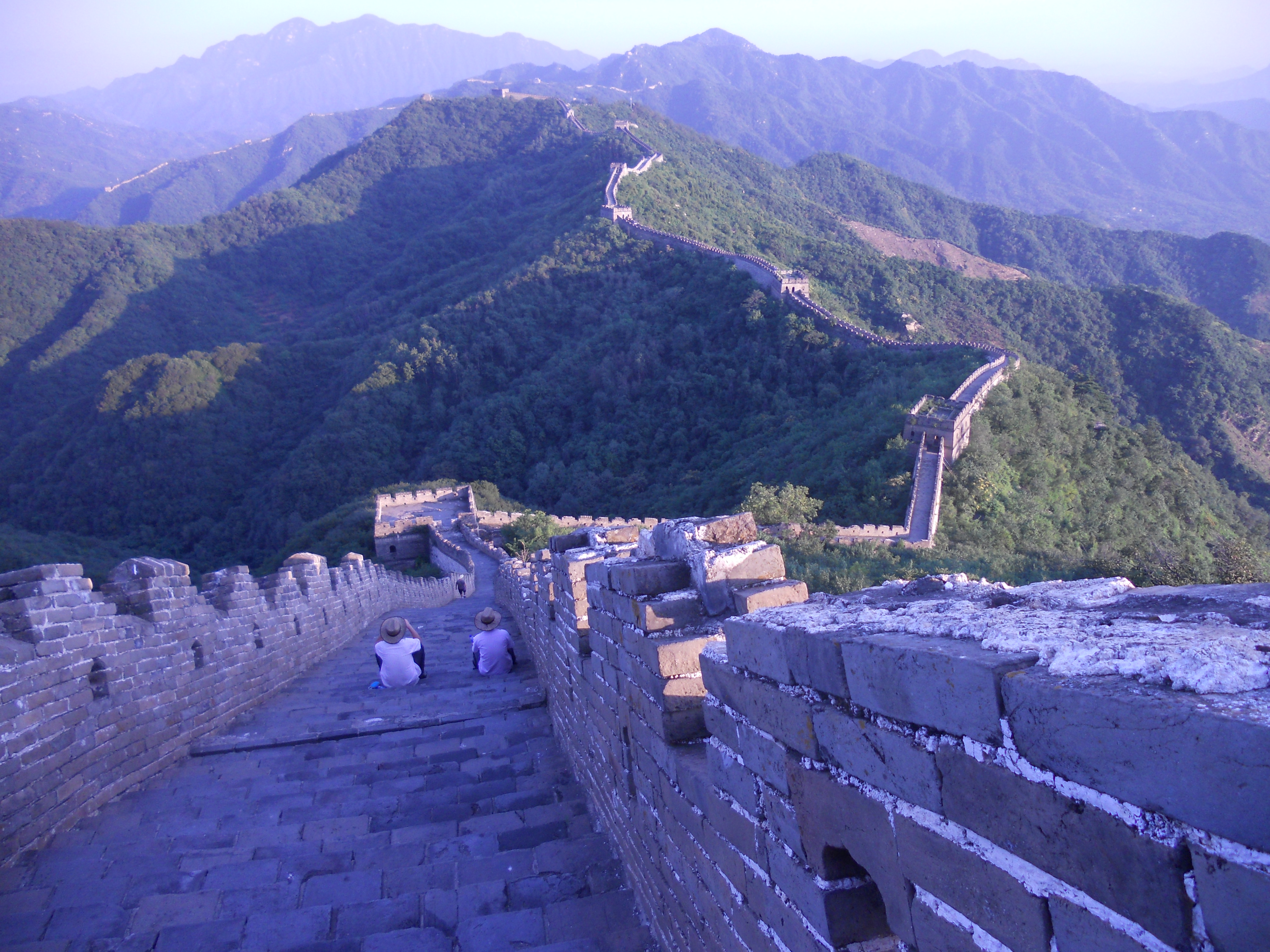
One of the first places I visited after moving to Beijing was the Great Wall at Mutianyu. It sits above a charming village that has benefited greatly from tourism. Group buses from Beijing, only 70 km away, whiz past farmers carrying wood and crops on narrow roads all day long.

The road that leads to the Wall has been taken over on both sides by vendors hawking T-shirts (I climbed the Great Wall!), Chairman Mao hats, poster prints of the Wall and dozens of other souvenirs. There’s even a Subway restaurant, but sadly no McDonald’s or Starbucks. I thought about turning around but kept going.

To get on the Wall you can either walk a steep trail or ride a ski lift. I chose the ski lift and as I waited in line, I walked past pictures of foreign dignitaries who had visited Mutianyu. One of the pictures was of a sweaty Bill Clinton boarding the lift (“Must have been sitting behind some young co-eds,” an American in front of me quipped).

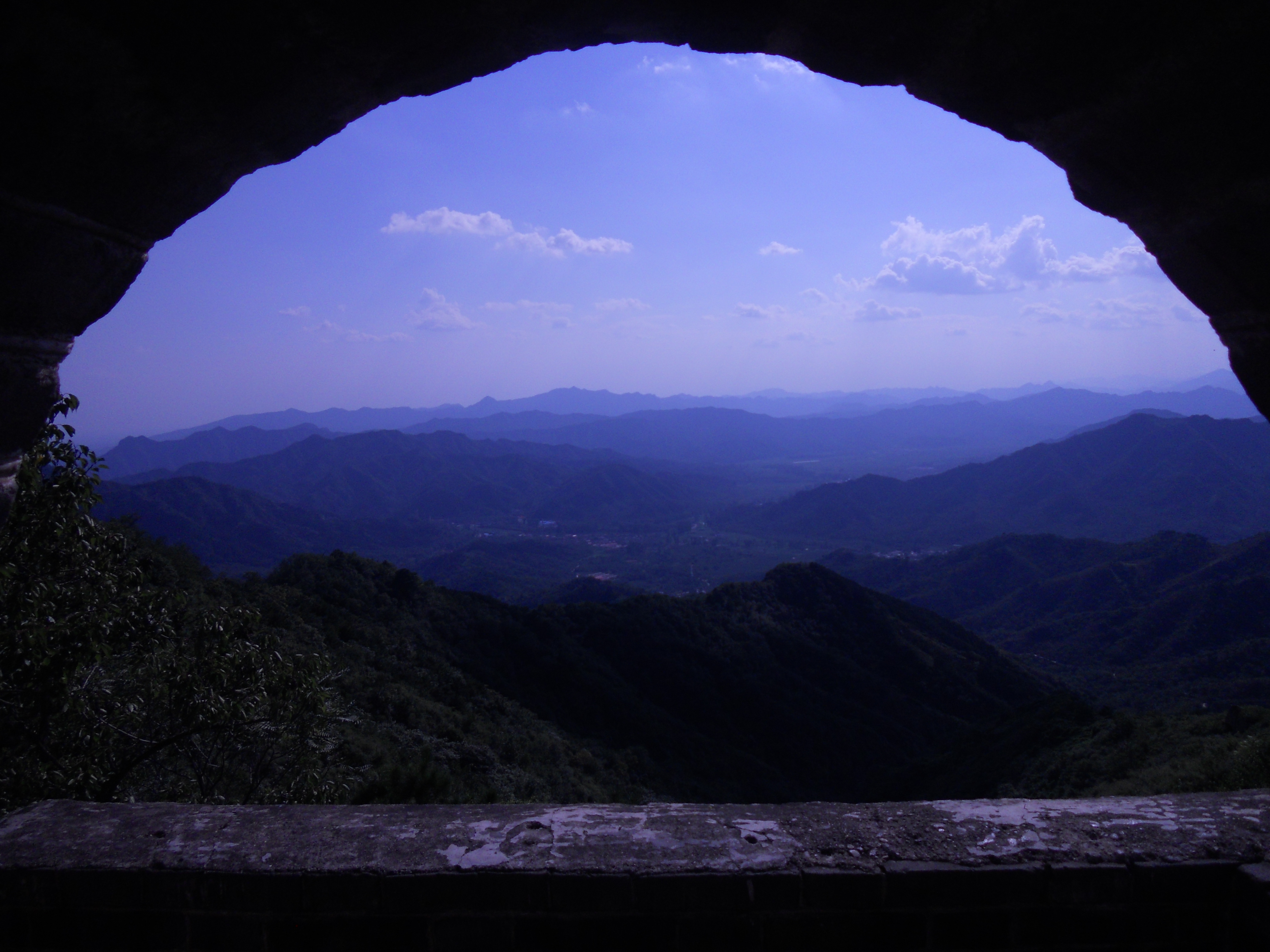
It was a clear day, and the views of the mountains were spectacular. But the Wall, still intact in most places, had a sanitized feel. Many of the towers and bricks at Mutianyu have been restored. I wanted to experience the Great Wall in its natural, crumbling state.

View from a tower window.

Sunset at Mutianyu.

Several months later, I went with three friends to an unrestored section called Huanghua (Yellow Flower). We hired a cab driver named Mr. Li to take us there. Our only request was that he get us to the Wall before dawn so we could take pictures of it at sunrise. Continue reading

Where emperors galloped

I went to Chengde on a whim, and it turned out to be the best city I had never heard of. My mother and brother were visiting Beijing from Kentucky, and I wanted to take them somewhere outside the Chinese capital so they could experience a different part of the country.

I picked Chengde because it was close and had a lot of history. During the Qing (1644-1911), China’s last dynasty, it served as a getaway for the royal family. Situated 250 kilometers northeast of Beijing, Chengde with its rolling mountains and thick forests provided a cool and scenic escape from the capital’s blistering hot summers and flat landscape.

Pule Temple, with downtown Chengde in the distance.

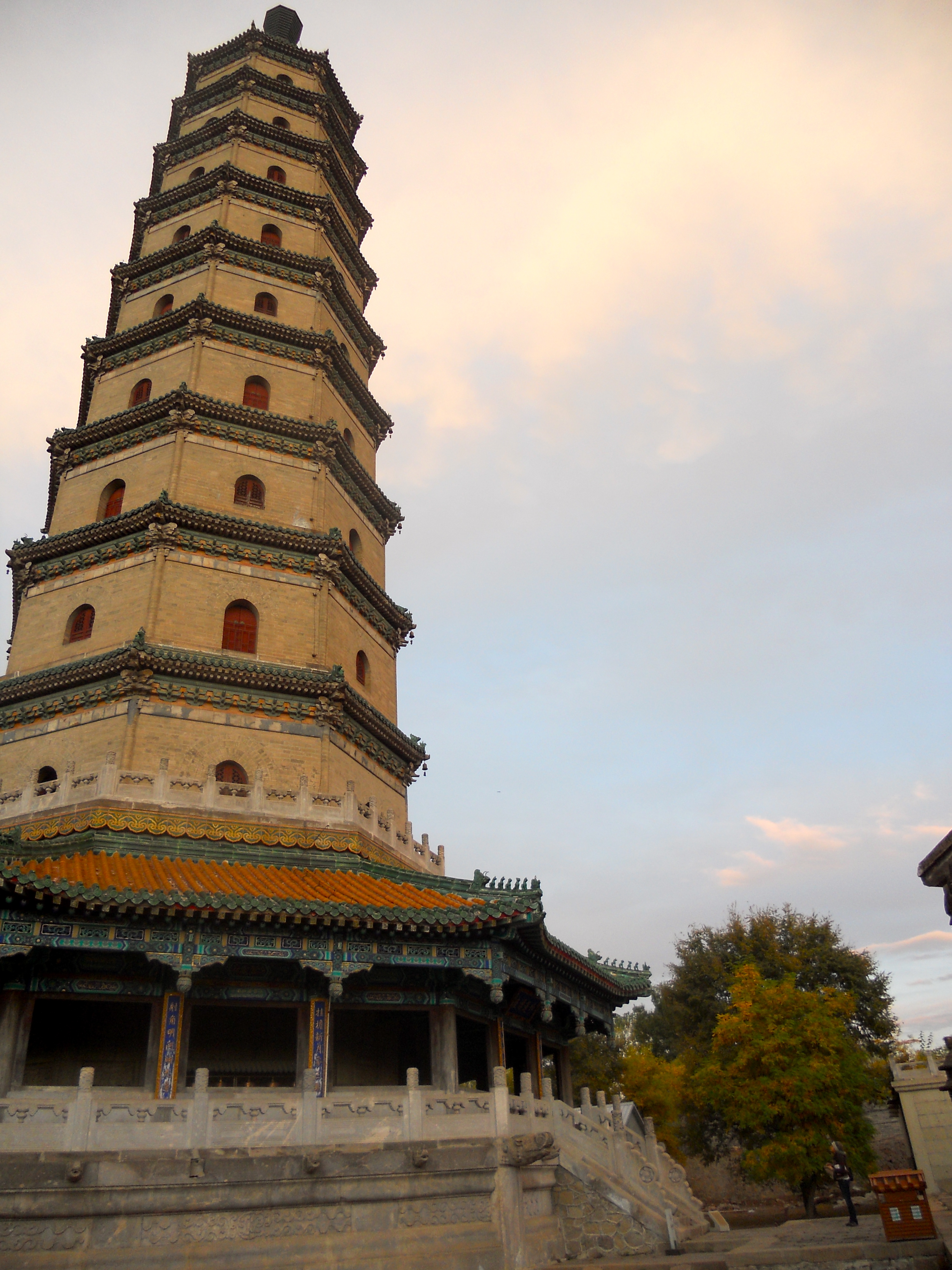
This pagoda, located inside the imperial summer resort, houses a statue of the Buddha.

We went in the fall, when the leaves had turned brilliant shades of red, yellow and orange. Chengde’s main historical site is Bishu Shanzhuang, an imperial summer resort that began construction in 1703. Admission was pricey – 120 RMB ($19) – twice what it costs to tour the Forbidden City in Beijing. But the resort’s impressive mountain lookouts justified the expense. Continue reading