To friend or not to friend

A couple weeks ago, I received an e-mail I never expected would come: “Vicki Nesbitt wants to be friends with you on Facebook.”

Vicki is my mother, the same person who – after receiving a text message – pointed to the screen and asked me: “What’s this envelope thing on my cellphone?”

I accepted her friend request, taking the plunge into this new world where baby boomers are discovering social media and connecting with their children online. At 33, I’m not worried about what she’ll see on my wall. I’m pretty tame, and the photos of me turning over police cars were destroyed long before Mark Zuckerberg entered Harvard. Continue reading

Father’s Day … Oh, the things we’d share

Father’s Day is one of the few days out of the year that I’m actually glad I live thousands of miles from home.

If I were back in Kentucky, I might drive to Kroger and buy a mismatched bouquet of flowers and take them to a graveyard not too far from where I attended high school. I’d pause before getting out of my car, maybe fiddle with the radio for a minute or two and take a deep breath. I’d probably be alone.

I’d find my father’s grave and stare at it for a while. His first name, David, is my middle name. I’d look at the year of death – 1989 – and think about my life before then. The memories I have are coated in the kind of yellow tint you might find in an Instagram photo. Continue reading

An excuse a day keeps the doctor away

I was having dinner with friends one evening when I felt a numbness in my chest. I thought maybe it was from something spicy I had eaten, so I excused myself from the table and walked to the bathroom. I splashed water on my face and paced in the stall, hoping the feeling would go away. But it just got worse, spreading from my chest to my left arm. My hands grew cold and clammy.

I went to the hospital later that night, and found out that my blood pressure was unusually high: 160/90. She asked me to return the following morning for a laboratory tests, including a blood test. I, of course, didn’t go back.

I’ve always felt like I could take care of my health on my own, just by eating properly and getting plenty of exercise. I’m stubborn too, which I inherited from my parents. I’ve watched my mother drag herself into work for a 12-hour shift for the seventh day in a row, when most people would have been bedridden. My father didn’t like to go to the doctor either.

A few weeks before he died when I was 10, we were playing catch in front of our house when I hit accidentally him in the thigh with a baseball. A bruise that should have been the size of a golf ball swelled to the size of a grapefruit. He promised he’d get it checked out but kept putting off making an appointment. He didn’t realize it at the time, but his blood wasn’t clotting like it was supposed to. He finally made an appointment for a Tuesday. He suffered an abdominal aneurysm two days before the scheduled appointment, and died on a Sunday. Continue reading

Performing America’s toughest job alone

I was riding in the back of a cab on a recent afternoon when the driver looked up and said he had a message for me.

“The 21st century belongs to China,” the man, in his 50s, said in Mandarin. “For every 10 cents we earn, we save 9, that’s why the Chinese were not really affected by the global financial crisis … Foreigners are now coming here to learn how to save money.”

I smiled and kept my mouth shut, as I often do when I’m told that China will pass the United States as the world’s top economy. It’s a common belief these days, not only here but in the rest of the world. The reason? As Bill Clinton would say, “It’s the economy stupid.”

“This is especially the case in Western Europe, where the percentage naming China as the world’s top economic power has increased by double digits in Spain, Germany, Britain and France since 2009,” Richard Wike, associate director of the Pew Research Center’s Global Attitudes Project, said last month in a discussion on US-China public opinion.
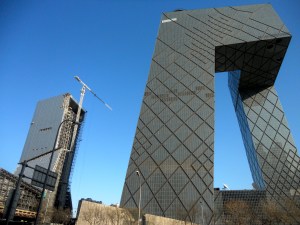
A luxury hotel under construction beside the gleaming China Central Television tower in downtown Beijing. Construction projects can be seen in many large cities in China, the world's second-largest economy.

Meanwhile, the Chinese, by almost a 2-to-1 margin, still rate the US as the world’s top economy, Wike said. Continue reading

Survivor’s story of hope continues to echo

Some voices are hard to forget.

I saw a preview recently for a show on the Biography Channel called “I Survived.” The show features people who have survived near-death experiences such as a grizzly bear attack, kidnapping and the Sept. 11, 2001, terrorist attacks on the World Trade Center. The survivors tell their stories without the help of a narrator and against a black background, giving it an intimate one-on-one feel.

One of the women in the clip looked familiar. But I didn’t make the connection until I heard her voice: “I survived that night because I had to live for my daughter.”

I first met Penny in 2006 when I was a reporter for the Evansville Courier & Press, a midsize newspaper in southern Indiana. Normally, I would go out and find people to interview for stories, but Penny found me. When she contacted the newspaper, her call was forwarded to me because I was on the police beat.

Penny told me that she had been raped and left for dead. She was upset at the way the police had treated her during the early parts of the investigation, and she wanted to share her story with the public. It was rare for a victim of a sex crime to want to speak about their case, and our newspaper had a policy of not identifying rape victims to protect their privacy. Continue reading

A thinning red line

I’ve probably wasted a few weeks of my life looking into the mirror, staring at the endangered grassland atop my head where red curls once grew. I tilt my head and adjust the light in the bathroom. I apply gel to prop up the strands that are too weak to stand on their own. And then I look again.

I feel like a loser.

I began losing my hair at 22, in my senior year of college. At first, it was like a slow drip. A few hairs at a time. By my late 20s, the pace quickened, and I helplessly watched my hairline move higher and higher.

I considered intervention and scanned hair-loss products at grocery stores, always late at night to avoid being seen. I even carried a bottle of Rogaine to the register once, but stopped short of buying it at the last second. Better to bald gracefully than to try to fight it. 

With a college roommate and my sister in March 2008. (Photo by Erin McCracken)

By the time I turned 30, my hair had thinned enough that you could see my scalp in several places. If I didn’t wear a hat to the beach, my head burned. My mom tried to reassure me, “It’s really not that bad.” My brother had a different opinion. “No dude. It is that bad.” Continue reading

Gone, but still a part of the band

I played the air piano while he played the guitar. Some of my earliest memories are of listening to my father, Dave, play music with his friends. I’d pretend to be a part of the band, imagining that the invisible instrument I was banging on made the collective sound of the guitar, bass and drums a little sweeter.

When my father wasn’t playing, I liked to march around our house in a trucker hat with his instruments. Once my younger sister, Valerie, became strong enough to carry a guitar, she became a part of the act. My parents probably found it amusing because there are several pictures of us posing side-by-side with his guitars, sometimes in our underwear.

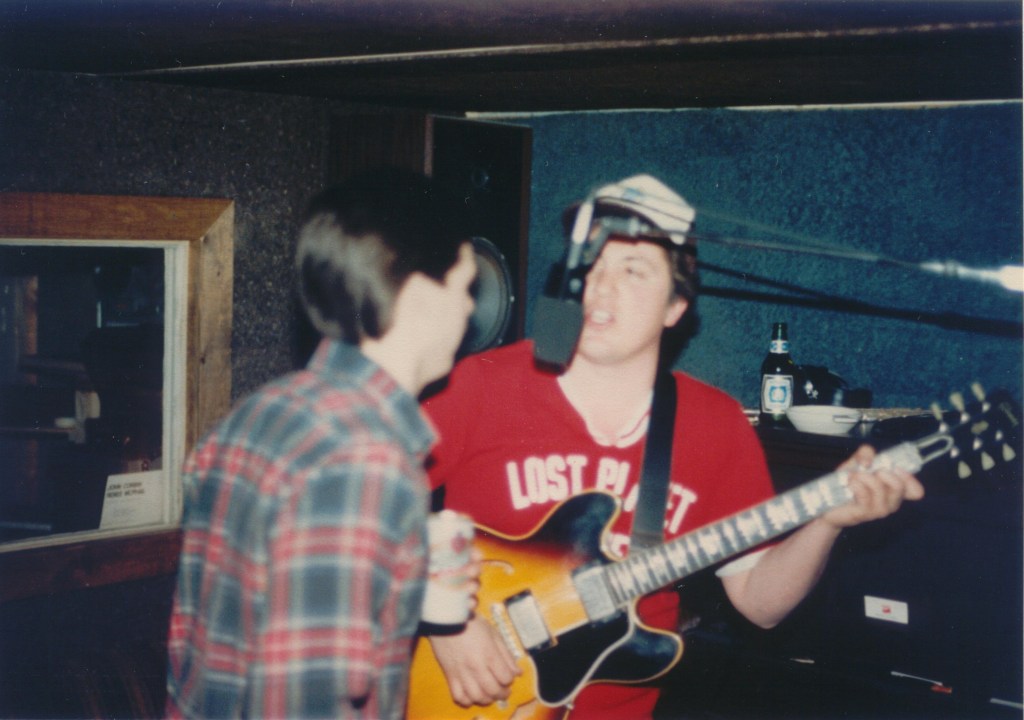
My father, Dave, (right) singing with his friend Paul. (Photo courtesy of Doug Wolgat)

I could probably remember more about those days with my father if I hadn’t spent years trying to forget them. When he died in 1989 of an abdominal aneurysm at the age of 34, my mother, Vicki, took his pictures off the wall. His instruments were put in a closet. His clothes, in a shed. The songs he had recorded onto cassette tapes were also packed away, but sometimes at night my mother would slip outside and listen to them in her car. Continue reading

It’s complicated: My relationship with Facebook

I deleted my Facebook account about a year ago. The novelty of connecting with people I hadn’t seen or heard from in years had worn off. Posting status updates or pictures felt fickle, and I wanted to spend more time doing things like reading books or exercising.

Before I clicked on the “Are you sure you want to do this?” button for the fifth time, I asked a friend of my late father whether he thought my dad would have liked Facebook. “Absolutely not,” he said. “You’re father was a face-to-face kind of guy. He didn’t even like talking on the phone.”

I felt good about my decision but received a lot of flak from friends. I think some of them took it as a personal insult. “How could you do this, especially now that you live in China?” was a question I heard a lot.

I told them that I thought Facebook was creating a narcissistic society, where adults competed for attention like children. The Onion once called Facebook a high school yearbook that keeps updating after you graduate. I thought a more appropriate comparison was People magazine, which publishes pictures of celebrities attending exclusive parties, holding hands with a new significant other and pushing a newborn in a stroller – the same kinds of pictures that people often post on Facebook. Continue reading