A thinning red line

I’ve probably wasted a few weeks of my life looking into the mirror, staring at the endangered grassland atop my head where red curls once grew. I tilt my head and adjust the light in the bathroom. I apply gel to prop up the strands that are too weak to stand on their own. And then I look again.

I feel like a loser.

I began losing my hair at 22, in my senior year of college. At first, it was like a slow drip. A few hairs at a time. By my late 20s, the pace quickened, and I helplessly watched my hairline move higher and higher.

I considered intervention and scanned hair-loss products at grocery stores, always late at night to avoid being seen. I even carried a bottle of Rogaine to the register once, but stopped short of buying it at the last second. Better to bald gracefully than to try to fight it. 

With a college roommate and my sister in March 2008. (Photo by Erin McCracken)

By the time I turned 30, my hair had thinned enough that you could see my scalp in several places. If I didn’t wear a hat to the beach, my head burned. My mom tried to reassure me, “It’s really not that bad.” My brother had a different opinion. “No dude. It is that bad.” Continue reading

Where emperors galloped

I went to Chengde on a whim, and it turned out to be the best city I had never heard of. My mother and brother were visiting Beijing from Kentucky, and I wanted to take them somewhere outside the Chinese capital so they could experience a different part of the country.

I picked Chengde because it was close and had a lot of history. During the Qing (1644-1911), China’s last dynasty, it served as a getaway for the royal family. Situated 250 kilometers northeast of Beijing, Chengde with its rolling mountains and thick forests provided a cool and scenic escape from the capital’s blistering hot summers and flat landscape.

Pule Temple, with downtown Chengde in the distance.

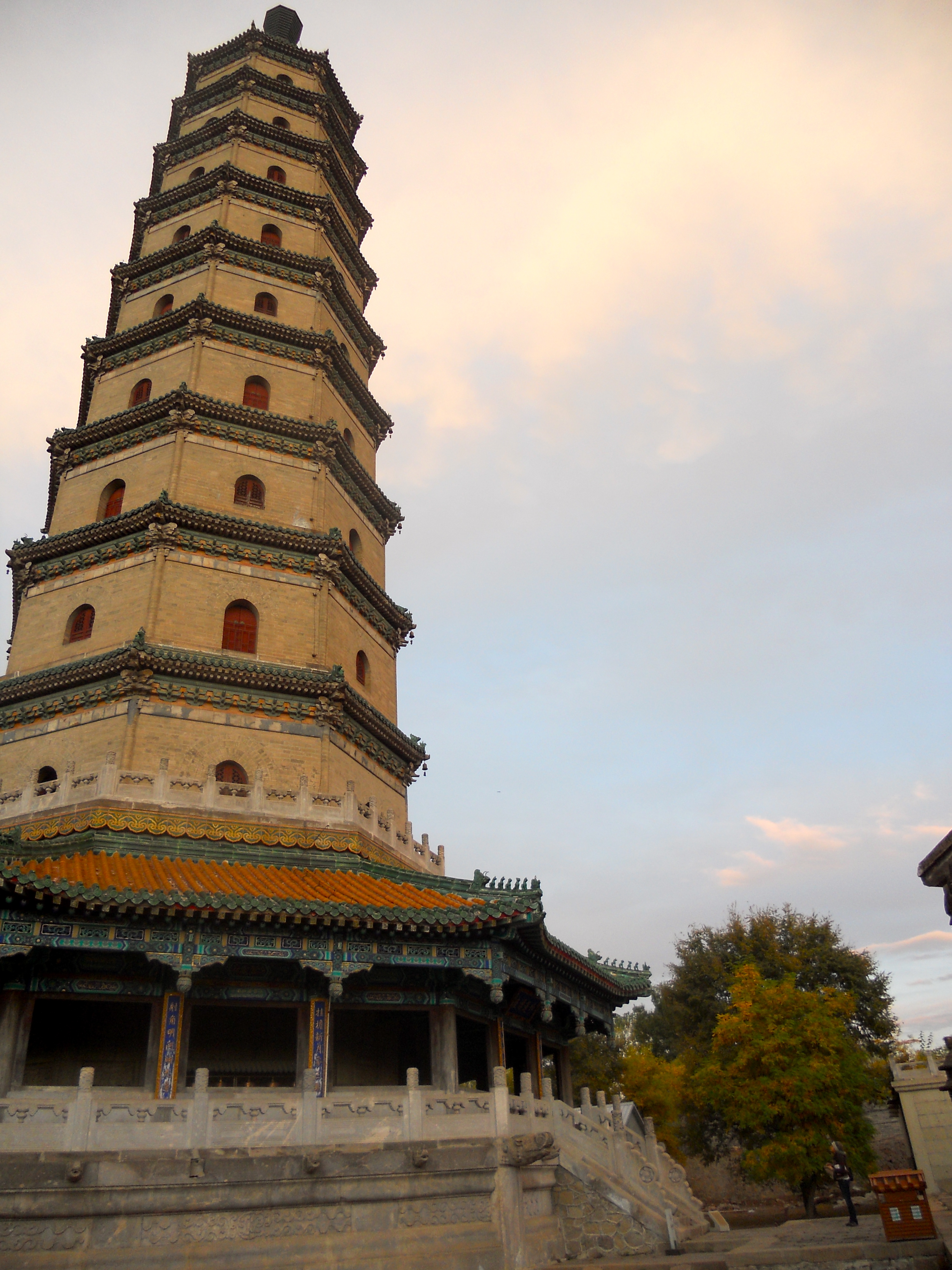
This pagoda, located inside the imperial summer resort, houses a statue of the Buddha.

We went in the fall, when the leaves had turned brilliant shades of red, yellow and orange. Chengde’s main historical site is Bishu Shanzhuang, an imperial summer resort that began construction in 1703. Admission was pricey – 120 RMB ($19) – twice what it costs to tour the Forbidden City in Beijing. But the resort’s impressive mountain lookouts justified the expense. Continue reading

iPhone 4 – China’s obsession with status

Long lines form before dawn. Those with a spot close to the front slump against the store’s exterior to catch a few minutes of rest in the freezing cold. An announcement is made. People panic and begin pushing. There are scuffles with security.

It’s a scene all too familiar by now to Americans. A phenomenon that happens once a year the day after Thanksgiving and turns wholesome, mouse-fearing stay-at-home moms into raging, get-to-aisle-6-by-any-means-necessary bargain hunters.

Only in this case, the lines weren’t for the latest Tickle Me Elmo doll or Nintendo gaming system. They weren’t even in America. They were outside Beijing’s Apple store for the launch of the iPhone 4S. Unlike businesses on Black Friday, the Apple store wasn’t offering any bargains. A 16 GB iPhone 4S without a contract costs about $140 more in China ($790) than in the United States ($649), even though the phones are manufactured at a factory on the Chinese mainland.

A crowd gathers outside the Apple Store in Beijing on Jan. 8, a few days before the iPhone 4S was scheduled to go on sale.

The demand for Apple products in China is so high that scalpers hire migrant workers to buy iPhones and iPads, which are then sold at a markup. The scalpers often stand within a few feet of the Apple store, holding iPhone boxes in the air and shouting “iPhone Si!, iPhone Si!” hoping to catch people leaving empty-handed (Si, pronounced “suh,” is the word for 4 in Mandarin).

“Customer response to our products in China has been off the charts,” Tim Cook, Apple’s CEO, said earlier this month in a press release. Continue reading

Gone, but still a part of the band

I played the air piano while he played the guitar. Some of my earliest memories are of listening to my father, Dave, play music with his friends. I’d pretend to be a part of the band, imagining that the invisible instrument I was banging on made the collective sound of the guitar, bass and drums a little sweeter.

When my father wasn’t playing, I liked to march around our house in a trucker hat with his instruments. Once my younger sister, Valerie, became strong enough to carry a guitar, she became a part of the act. My parents probably found it amusing because there are several pictures of us posing side-by-side with his guitars, sometimes in our underwear.

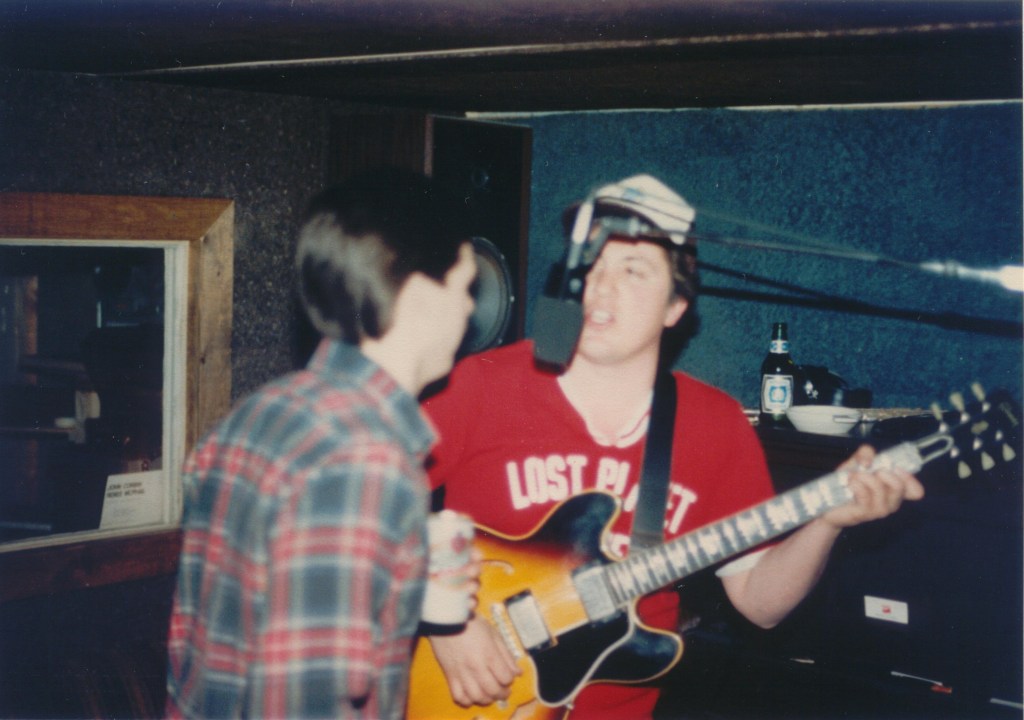
My father, Dave, (right) singing with his friend Paul. (Photo courtesy of Doug Wolgat)

I could probably remember more about those days with my father if I hadn’t spent years trying to forget them. When he died in 1989 of an abdominal aneurysm at the age of 34, my mother, Vicki, took his pictures off the wall. His instruments were put in a closet. His clothes, in a shed. The songs he had recorded onto cassette tapes were also packed away, but sometimes at night my mother would slip outside and listen to them in her car. Continue reading

What, there are still stars?

Needing a break from Beijing’s cold, dry winter, I traveled to the Philippine city of Puerto Princesa for Christmas. It’s located on an island called Palawan, a place where Chinese families migrated from the mainland in the early 20th century in search of a better life.

The Immaculate Conception Cathedral is near the Puerto Princesa port, which gave the city its name, meaning "Port of the Princess."

White-sand beaches outline the island. The seas are rich with grouper, snapper and blue marlin. And no matter the season, sweet mangoes and fresh coconut milk are just a short climb away. Continue reading

It’s complicated: My relationship with Facebook

I deleted my Facebook account about a year ago. The novelty of connecting with people I hadn’t seen or heard from in years had worn off. Posting status updates or pictures felt fickle, and I wanted to spend more time doing things like reading books or exercising.

Before I clicked on the “Are you sure you want to do this?” button for the fifth time, I asked a friend of my late father whether he thought my dad would have liked Facebook. “Absolutely not,” he said. “You’re father was a face-to-face kind of guy. He didn’t even like talking on the phone.”

I felt good about my decision but received a lot of flak from friends. I think some of them took it as a personal insult. “How could you do this, especially now that you live in China?” was a question I heard a lot.

I told them that I thought Facebook was creating a narcissistic society, where adults competed for attention like children. The Onion once called Facebook a high school yearbook that keeps updating after you graduate. I thought a more appropriate comparison was People magazine, which publishes pictures of celebrities attending exclusive parties, holding hands with a new significant other and pushing a newborn in a stroller – the same kinds of pictures that people often post on Facebook. Continue reading

Video of toddler left for dead sparks debate

On Oct. 13, a 2-year-old girl walking alone in the middle of a market street in the southern Chinese city of Foshan was run over by a van. Had her story stopped there, it likely would have generated little interest from the Chinese media. But a security camera in the market recorded the accident, and the video would horrify people around the world.

It showed that the van didn’t stop after it hit the girl, and neither did the next 18 people who passed by her body. A few slowed their pace and glanced down, the kind of thing a jogger on a trail might do to step around a dying animal.

A few minutes after she was struck by the van, a second vehicle ran over her leg. The girl barely moved. The vehicle kept going. Eventually, a trash collector stopped, pulled the girl’s body to the side of the street and left to find help.

The girl, later identified as Wang Yue, was critically injured and taken to a hospital. The video of the accident was posted on Youku, China’s version of Youtube. It quickly went viral, with viewers expressing their disgust at the people who walked by Wang Yue but didn’t help. Continue reading

Beijing’s indefinite particles

The skies were brilliant blue the day I arrived in Beijing. From the street, you could see the tops of skyscrapers. And from the tops of skyscrapers, you could see the outline of jagged mountains on the horizon.

This kind of visibility wasn’t normal, and sure enough within a few days, a haze began to set over the city. The tops of tall buildings disappeared in the smog. The air became heavier, and I found it harder to breathe, especially when I exercised outside, which I like to do. Cars in my neighborhood that hadn’t been moved for days became coated in residue of some kind. If you left a window open at your home, the dust seeped in and settled on the floor.

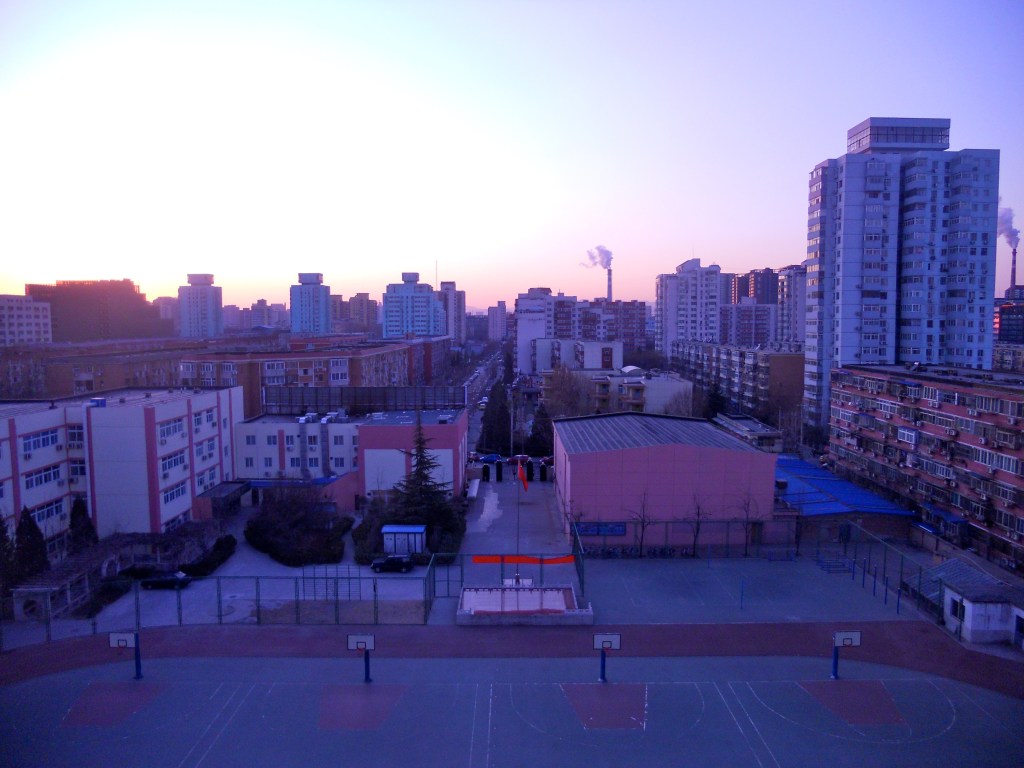
The view from the 9th floor of my apartment building on a clear day.

The view from the 9th floor of my apartment building on a polluted day.

You get used to the pollution after a while, at least the sight of it. I treat it as a trade-off for living in a rapidly developing land of opportunity, where jobs for college-educated expats are in high demand.

Continue reading

Land of the free and home of the buffet

I was watching an episode of The Office on Hulu recently when in between segments of the show a commercial for Kentucky Fried Chicken came on.

It was an ad for KFC’s new Cheesy Bacon Bowl. “There’s a reason our KFC famous bowl is famous,” it began. A man leaned into the camera, as if to share a secret. “We put bacon on it.”

Bacon bits rained down into a bowl of fried chicken, cheese, potatoes and gravy. “Everything is better with bacon.”

Anyone who really believes that everything is better with bacon has an eating problem. And America, you most certainly do. Lady Liberty can no longer see her feet, and it isn’t because she’s expecting a little statue in four months.

Feed me Seymour!

Let me give you some perspective. I live in the world’s most populous country, a nation of 1.3 billion where the obesity rate is around 5 percent. You have a population of 311 million people with an obesity rate of greater than 20 percent. You haven’t always been this fat. To get an idea of how quickly you’ve let yourself go, check out an animated map on the Centers for Disease Control and Prevention’s website that shows how the obesity rate has exploded from 1985 to 2010. It’s disturbing and will make you pause the next time you think about supersizing your fries. Continue reading

Strawberry chunks forever

In the years following the Sept. 11 terrorist attacks, Homeland Security officials, when asked to assess the threat of another attack, often responded: “It’s not a matter of if, but when.”

The same can be said about food poisoning in Beijing. No Western diet can prepare a man’s stomach for the taste, smell and texture of authentic Chinese cuisine. Eat here long enough, and it’s only a matter of time until you’re staggering to the nearest toilet, puking yourself into a coma.

I didn’t get sick for the first eight months I lived in Beijing. It wasn’t because I didn’t take risks. I ate food I didn’t know existed (sea cucumber), bit a bird below the ankle (chicken feet) and tried without much luck to chew through undercooked bull intestines. Any part of an animal is fair game to the Chinese. “Are you going to eat that?” a co-worker once asked me over dinner, pointing with his chopsticks to the eyeball of a fish that had been picked to the bone.

I also tried as many different kinds of restaurants as I could. There’s a huge variety in the city, and with a little research you can find nearly any kind of ethnic food in the world.  Beijing has around 60,000 restaurants, according to a local English-language magazine. Assuming you dined out three times a day, it would take about 55 years to try every restaurant in the city.

How do I know where your feet have been?

I had probably tried less than 100 by the time I sat down for dinner at a nondescript seafood restaurant for a meal of oysters and scallops. Cooked and coated in butter, they were delicious. As it has a tendency to do, the underdeveloped part of my brain that tells my hands to stop putting food into my mouth took the night off. Thirty oysters and a couple of cheap lagers later, I left and made a mental note of where the restaurant was located, hoping to come back. Continue reading